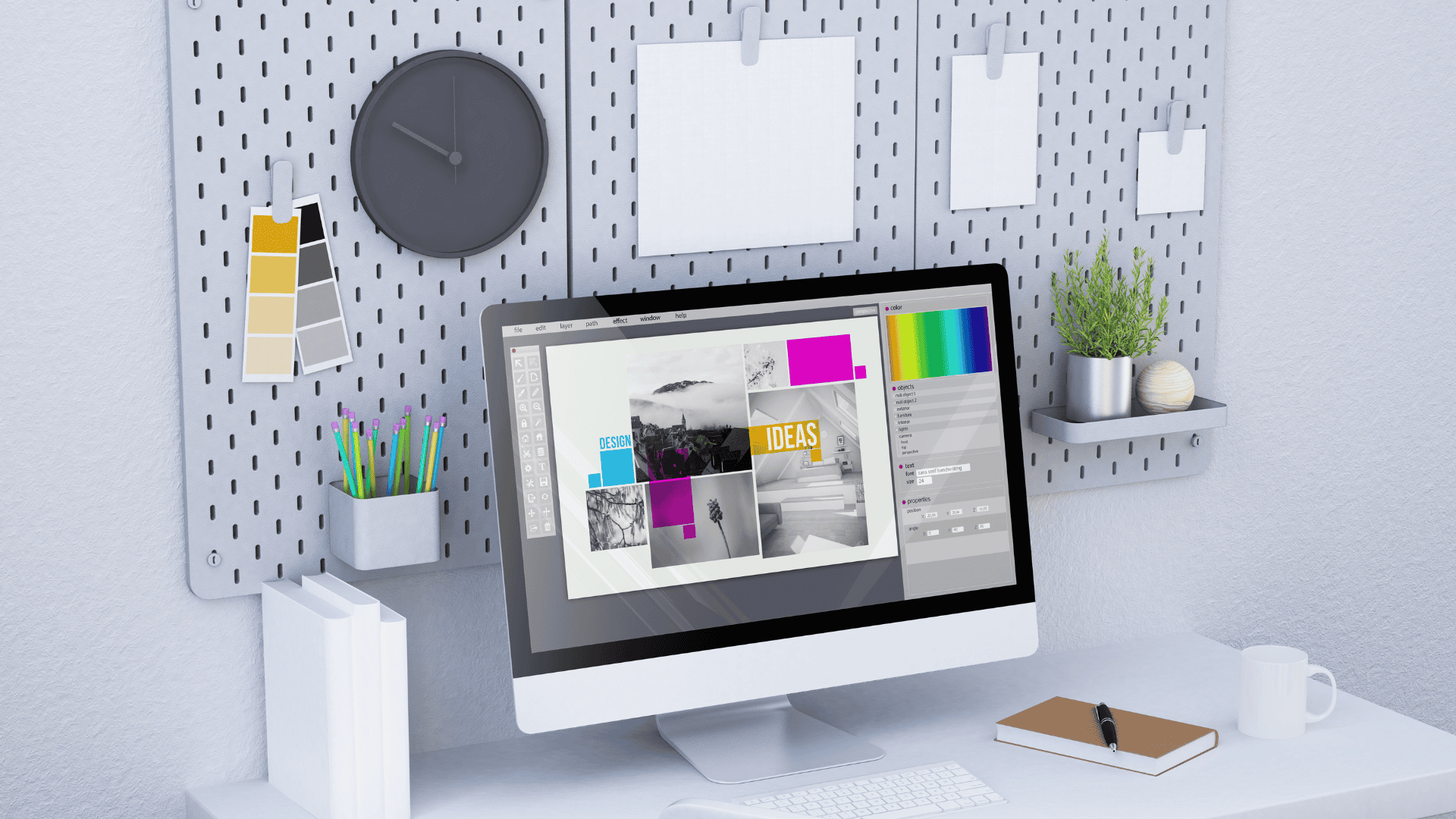

Digital marketing is the engine that drives brand discovery, conversions, and customer loyalty online. Paired with thoughtful graphic design, digital marketing becomes a cohesive experience that captures attention, communicates value, and converts visitors into customers. For small businesses, integrating digital marketing with design isn’t optional—it’s the difference between getting noticed and getting remembered.
Why Digital Marketing Needs Graphic Design
Digital marketing delivers the message; graphic design makes the message memorable. Ads, landing pages, email campaigns, social posts, and website pages all compete for attention. Strong visuals cut through noise, communicate hierarchy, and create trust in seconds. A well-coordinated digital marketing campaign uses consistent brand visuals and design systems so every touchpoint reinforces the same promise.
Key ways graphic design strengthens digital marketing:
• Builds instant brand recognition across channels.
• Guides user attention with clear visual hierarchy and CTAs.
• Improves perception of credibility and professionalism.
• Increases ad click-through rates and landing page conversions.
• Ensures messaging scales across formats without losing impact.
Core Elements Where Digital Marketing and Graphic Design Intersect
Brand Identity and Digital Marketing
A cohesive brand identity (logo, color palette, typography) underpins every digital marketing channel. When a user recognizes color, typography, or a logo, trust forms faster—reducing friction in the buyer’s journey.
Visual Content for Social Media Marketing
Social platforms reward scroll-stopping visuals. A graphic designer creates templates and compositions that align with the marketer’s calendar so posts maintain consistency while still being optimized for each platform’s best-performing formats.
Landing Page Design and Conversion Rate Optimization
Landing pages are where design-driven marketing converts interest into action. Design decisions—visual hierarchy, white space, image selection, and CTA styling—directly affect conversion rates. Designers and marketers should iterate on visuals using A/B tests and analytics.
Email Design and Deliverability
Well-designed emails with clear hierarchy and accessible visuals improve engagement rates. Graphic designers optimize image sizes, create email-safe typography, and design modular templates that digital marketing teams can reuse for campaigns.
Paid Advertising Creative
Ad performance hinges on the creative. Designers produce multiple ad variations (imagery, copy layout, and color treatments) that digital marketing teams test to find the combinations that maximize CTR and reduce cost-per-acquisition.
Workflow: How Teams Combine Digital Marketing and Graphic Design
2. Creative brief: a graphic designer receives audience insights, messaging priorities, and channel specs.
3. Moodboards and wireframes: quick visual experiments ensure alignment before production.
4. Production and asset build: designers create scalable files and platform-specific exports.
5. Implementation: visual marketing schedules and deploys assets across channels.
6. Measurement and iteration: designers and marketers review metrics and refine visuals for better performance.
Practical Tips for Small Businesses
• Create a brand asset kit (logo variations, color codes, type scale, and image guidelines) to streamline digital marketing execution.
• Use flexible design templates for social media, ads, and email so non-design staff can produce on-brand content quickly.
• Prioritize mobile-first design; most traffic comes from mobile devices.
• Test creative frequently; small tweaks in color, imagery, or CTA placement often yield measurable gains.
• Track creative metrics (CTR, time on page, conversion rate) alongside spend to evaluate ROI for design investments.
Case Example (Small Business)
A local bakery in China Grove launched a seasonal campaign promoting a new product. With designer-created hero images, cohesive color accents, and conversion-focused landing pages, they achieved:
• 28% higher CTR on Facebook ads
• 18% higher landing page conversion rate
• Stronger brand recall among returning customers
Design made the campaign feel polished and trustworthy, so ad spend worked harder.
Measuring Success: KPIs Where Design Impacts Marketing
• Click-through rate (CTR) on ads and emails
• Conversion rate on landing pages and product pages
• Bounce rate and time on page for campaign landing pages
• Social engagement (shares, saves, comments)
• Cost-per-acquisition (CPA) improvements after creative optimization
Linking these KPIs to specific creative changes helps justify ongoing design investment.
Final Thoughts
Digital marketing and graphic design are best treated as one coordinated discipline. When marketers and designers collaborate from strategy through iteration, small businesses get campaigns that look great and perform reliably. Investing in both the strategy of digital marketing and the craft of graphic design delivers measurable returns and builds lasting brand equity.
Ready to align your digital marketing with high-impact design? Contact Genuinely Gina to get a practical action plan and sample creative mockups tailored to your small business.